Special Session
Special Session on
Computational Methods for Intelligent Biofabrication: Models, Data and Reproducible Benchmarks -
CompBioFab
2027
19 - 21 February, 2027 - Valletta, Malta
Within the 20th International Joint Conference on Biomedical Engineering Systems and Technologies - BIOSTEC 2027
CO-CHAIRS

|
Roberta Bardini
Politecnico di Torino
Italy
|
|
|
|
Short Bio
Roberta Bardini leads the intelligent biofabrication research line at the SMILIES research group, Department of Control and Computer Engineering, Politecnico di Torino, where she is Assistant Professor (RTD-A). She holds an M.Sc. in Molecular Biotechnology from the University of Turin (2014) and a Ph.D. in Control and Computer Engineering from Politecnico di Torino (2019). Her research develops computational methods connecting fabrication and culture protocols to biological organization, maturation and function, drawing on mechanistic and multiscale modelling, machine learning, optimization, digital twins and multimodal data integration. She also works on neuronal dynamics and plasticity and on neuromorphic computing. She is the principal inventor of two national patents (2021, 2022) on the computational generation of biofabrication protocols, developed within the cultura technology transfer initiative and supported by proof-of-concept grants from LIFTT (2020–2021) and the Italian Ministry of Economic Development (2021–2022), and by a research grant from the Just The Woman I Am initiative (2022–2023). She co-authored Bardini, R., Di Carlo, S., "Computational methods for biofabrication in tissue engineering and regenerative medicine – a literature review" (Computational and Structural Biotechnology Journal, 2024). A central element of her research vision is that progress in intelligent biofabrication depends on interdisciplinary collaboration across computational and systems biology, bioengineering, tissue engineering, control and the experimental life sciences, and on open and FAIR computational ecosystems in which models, datasets, protocols, benchmarks, and software can be shared, compared, and reused. Her work in this direction includes contributing to SMILIE's open-source software (https://github.com/smilies-polito) and FAIR digital assets (https://zenodo.org/communities/smilies/records).
|

|
Laurence Calzone
Computational Oncology Unit, Institut Curie
France
|
|
|
|
Short Bio
Dr. Laurence Calzone is Senior Researcher and co-PI of the Computational Systems Biology of Cancer group, specialising in systems biology, mechanistic modelling, and computational oncology. She has held leadership roles in several EU-funded initiatives and developed computational tools supporting personalised cancer modelling through multimodal data integration and mathematical/statistical inference. More specifically, Dr Laurence Calzone has a long experience in developing mathematical models based on nonlinear ordinary differential equations, Boolean formalism and agent-based approaches to address specific biological questions related to cancer with the aim to provide personalized treatments. She is involved in developing methods and tools to build and integrate omics data into these models. She is trying to connect machine learning approaches to mechanistic modelling. She is an active member of modelling communities such as CoLoMoTo, (http://www.colomoto.org/), Bioss (https://gt-bioss.cnrs.fr/), or BIDT (https://immunedt.github.io/team/).
|
|
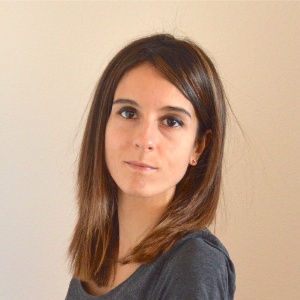
Miriam Filippi
Institute for Robotics and Intelligent Systems, ETH Zurich
Switzerland
|
|
|
|
Short Bio
Dr. Miriam Filippi is an Established Researcher in Bio-hybrid Robotics and Principal Investigator at the Soft Robotics Lab, ETH Zurich, where she leads research on biofabrication, intelligent biological machines, and adaptive, biomimetic robotic systems. Her work integrates living tissues with synthetic structures to create biohybrid robots capable of sensing, actuation and autonomous function, with applications in environmental monitoring, service robotics and medical technologies. She earned her Ph.D. in Pharmaceutical and Biomolecular Sciences at the University of Turin, working on nano- and microsystems for theranostics and regenerative therapies, and subsequently advanced tissue engineering research at the University Hospital of Basel, exploring nanomaterials, magnetic actuation and regenerative strategies for bone, cartilage and nerve implants. At ETH Zurich she combines biology, materials science and robotics to develop sustainable biohybrid platforms, including cardiac and skeletal muscle tissue-based actuators, neural-inspired control architectures and integrated feedback systems. Her recent work focuses on machine learning approaches to study biomechanics and bioelectronic signals as developmental cues, enabling a deeper understanding of how functional tissue properties emerge over time and how they can be predicted and guided during biofabrication. In parallel, she develops computational and AI-driven frameworks to model tissue maturation and functional evolution, aiming to make biofabrication more controllable, reproducible and sustainable. Her contributions have been recognised through the Wittenstein Biointelligence Award (2024), the Micromachines Young Investigator Award (2025), the IEEE EMBS Early Career Achievement Award (2026) and the MDPI Young Women in Engineering Award (2026). She is also a sustainability officer promoting eco-conscious biomanufacturing and robotics.
|
|
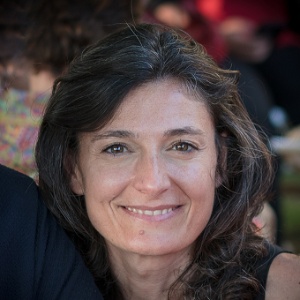
Diana Massai
Politecnico di Torino
Italy
|
|
|
|
Short Bio
Diana Massai is Associate Professor of Bioengineering at Politecnico di Torino (Italy), where she leads the Bioreactor Division of the Solid and Fluid Biomechanics Group at the Department of Mechanical and Aerospace Engineering and teaches the course “Bioreactors.” She is a member of the Executive Board of the Italian Interuniversity Center for the Promotion of the 3Rs Principles in Teaching and Research (Centro 3R). She has more than 15 years of experience in the design and development of advanced bioreactor technologies and experimental platforms for dynamic cell and engineered tissue culture, mechanotransduction studies, and, more recently, cellular agriculture. Her research combines engineering, biology, and multiscale mechanical characterization to develop physiologically relevant in vitro 3D models and investigate the interactions between cells, biomaterials, and biophysical stimuli. A major focus of her current research is the development of New Approach Methodologies (NAMs) based on advanced in vitro models and controlled bioreactors, with the aim of improving the physiological relevance, reproducibility, and translation of experimental studies while contributing to the implementation of the 3Rs principles. Her research activity strongly emphasizes the integration of quantitative experimental approaches with computational and data-driven methods, providing well-controlled experimental datasets for model development and validation. She is also actively engaged in technology transfer and in translating bioengineering research into innovative tools for biomedical and industrial applications.
|
SCOPE
Biofabrication, the automated generation of functional constructs from cells, biomaterials and bioactive molecules, still relies on trial-and-error design, and the cost of wet-lab iterations makes exhaustive experimentation infeasible. Intelligent Biofabrication replaces this with model-based, predictive engineering: simulators of cellular behaviour, hybrid multi-scale models and digital twins, protocol optimisation, and data-driven approaches learning from accumulated evidence. Beyond construct quality, it makes accelerated discovery, shorter translational timelines, lower cost and smaller environmental footprint explicit design objectives. Interdisciplinary convergence is this session's organising principle. Progress comes when models are calibrated on data produced with them in mind, and experimental platforms are designed to be modelled. It is structured around an objective both sides need: shared benchmark problems, datasets and evaluation protocols.
TOPICS OF INTEREST
Topics of interest include, but are not limited to:
- Computational Models and Simulators of Biofabrication and Tissue Maturation Processes
- Hybrid Multi-Scale Modelling and Coupling of Formalisms Across Molecular, Cellular and Construct Scales;
- Digital Twins of Biofabrication Processes and Bioreactors
- Model Calibration, Validation and Uncertainty Quantification
- Standards, Exchange Formats and Interoperability Between Modelling Frameworks
- Datasets, Data Standards and Metadata for Biofabrication
- Benchmark Problems, Evaluation Protocols and Reproducibility Practices
- Machine Learning and Generative Models for Protocol Design;
- Optimisation, Design-Space Exploration and Simulation-Optimisation
- Advanced in Vitro Models, Organoids and New Approach Methodologies (NAMs)
- Bioreactor-Based Culture, Controlled Biophysical Stimulation and Quantitative Characterization of Engineered Tissues
- Sustainable Biofabrication, Resource-Aware Protocol Design and Life-Cycle Considerations;
- Engineered Living Materials
- Automation and Computational Workflows for Biofabrication Pipelines
- Reviews, Perspectives, and Roadmap Contributions
IMPORTANT DATES
Paper Submission:
December 3, 2026
Authors Notification:
December 21, 2026
Camera Ready and Registration:
January 8, 2027
SPECIAL SESSION PROGRAM COMMITTEE
Michele Conti,
Università di Pavia, Italy
Carmelo De Maria,
University of Pisa, Italy
Elisabetta Roviera,
Politecnico di Torino, Italy
Alessandro Savino,
Politecnico di Torino, Italy
Riccardo Smeriglio,
Politecnico di Torino , Italy
(list not yet complete)
PAPER SUBMISSION
Prospective authors are invited to submit papers in any of the topics listed above.
Instructions for preparing the manuscript (in Word and Latex formats) are available at: Paper Templates
Please also check the Guidelines.
Papers must be submitted electronically via the web-based submission system using the appropriated button on this page.
PUBLICATIONS
After thorough reviewing by the special session program committee, all accepted papers will be published in a special section of the conference proceedings book - under an ISBN reference and on digital support - and submitted for indexation by SCOPUS, Google Scholar, DBLP, Semantic Scholar, EI and Web of Science / Conference Proceedings Citation Index.
SCITEPRESS is a member of CrossRef (http://www.crossref.org/) and every paper is given a DOI (Digital Object Identifier).
All papers presented at the conference venue will be available at the SCITEPRESS Digital Library